China’s top 10 furniture suppliers are often judged by price, design, and production capacity. Durability deserves equal attention. A polished showroom cannot reveal weak joints, unstable panels, or poor moisture control.
So, what factors affect furniture durability? Material quality, joinery, surface finishing, hardware strength, manufacturing precision, packaging, and indoor climate all matter. Solid wood may endure for decades, yet it can crack when humidity changes sharply. Particleboard can perform reliably, but only with dense cores, sealed edges, and protected screw holes. Small details matter.
Dr. Alex C. Wiedenhoeft, a wood anatomist with the USDA Forest Service, explains, “Wood is a hygroscopic material, meaning it gains or loses moisture from the surrounding air.” This principle helps explain warping, splitting, and loose connections in everyday furniture. The USDA Forest Products Laboratory’s Wood Handbook supports this moisture-related analysis.
Industry evidence also provides useful context. The CSIL World Furniture Outlook 2024 examines global furniture production, consumption, and trade patterns. Meanwhile, BIFMA durability standards assess seating through repeated loading, impact, stability, and structural tests. These standards cannot predict every household problem. They can, however, expose weak engineering before products reach customers.
This guide compares ten leading Chinese furniture suppliers through practical durability indicators. It considers materials, factory controls, testing evidence, warranty terms, and after-sales experience. The evaluation is not perfect. Supplier data can be incomplete, and laboratory results may not reflect a humid apartment, a busy restaurant, or a child’s daily use. That limitation deserves attention.
Durability is not a single feature. It is a chain, and the weakest link often fails first.
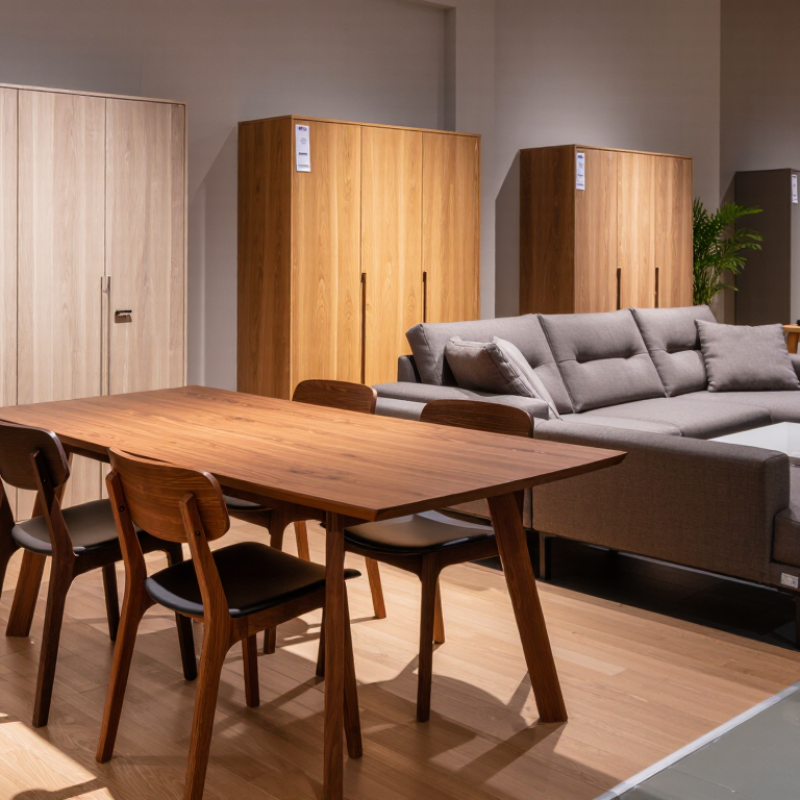
Durability should be measured, not assumed. Our ranking model reviews laboratory records, factory quality controls, warranty-claim rates, and independent sample inspections. Suppliers are scored against BIFMA X5.4 seating tests, ISO 7173 strength requirements, and ISO 4892 weathering methods. The highest-ranked suppliers provide traceable reports, stable batch results, and clear material specifications. The lower-ranked suppliers often submit impressive samples, but their production evidence remains incomplete. That gap matters.
The highest-ranked suppliers provide traceable reports, stable batch results, and clear material specifications.
The strongest suppliers recorded fewer structural failures during repeated-load testing. Some seating samples passed 100,000-cycle evaluations, while cabinet units survived repeated door and drawer operation. However, test conditions differ between laboratories. A pass mark does not guarantee long service life in a humid apartment or busy hotel. CSIL’s World Furniture Outlook also shows China remains a major global furniture manufacturing base, but market scale alone proves nothing about durability. We should question rankings built only on factory size or export volume.
Tips: Request the latest test report, not a template. Check the laboratory’s accreditation. Ask for batch-level moisture readings, hardware specifications, and repair data. Inspect hidden joints, drawer runners, and panel edges. One weakness remains: public warranty datasets are limited, so even a careful ranking can change when more verified evidence appears.
For China’s top furniture suppliers, durability begins with material quality, not surface appearance. E1 classification limits formaldehyde emissions to 0.124 mg/m³ under the EN 717-1 chamber test. This threshold is close to the World Health Organization’s 0.1 mg/m³ indoor guideline for 30-minute exposure. However, E1 compliance does not guarantee long service life. It measures emissions, not joint strength, swelling, or resistance to daily humidity.
Wood moisture control is equally important. The USDA Forest Products Laboratory’s Wood Handbook explains that wood continually exchanges moisture with surrounding air. At typical indoor conditions, furniture wood often needs moisture content near 6–10%, depending on climate and species. Excess moisture can cause warping, open joints, and veneer lifting. Extremely dry wood may shrink and crack around fasteners.
Good suppliers should test moisture across several board locations, not only one visible edge. Calibrated meters, incoming inspection records, and controlled factory storage provide stronger evidence than a certificate alone. Panels should also be sealed carefully at cut edges. Small gaps matter. In practice, factories may miss a hidden damp core, especially during humid shipping seasons. That weakness deserves review. Buyers should request recent laboratory results, production moisture logs, and test samples after storage in realistic room conditions.
When comparing China’s top ten furniture suppliers, durability often begins beneath the upholstery. A strong frame must transfer weight without loosening its joints. BIFMA and EN load-cycle tests make that weakness visible. Technicians repeatedly load chairs, desks, or cabinet frames under controlled conditions. They inspect welds, screws, dowels, fasteners, and connection points after repeated cycles. A joint shifting by a few millimeters can become a serious complaint later.
BIFMA procedures commonly assess office furniture through repeated loading and functional movement. EN methods may use different loads, cycles, fixtures, and acceptance limits. The exact standard matters. Suppliers should identify the test edition and product category, not only display “passed.” A chair leg may survive vertical loading but fail when users lean sideways. A cabinet connector may hold static weight yet loosen after daily opening and closing. Details matter.
Reliable evaluation combines laboratory records with production checks. Inspectors should compare tested samples with finished batches, weld penetration, screw torque, and material thickness. Photographs of failed joints can reveal deformation before collapse. Still, testing is not real life. Humidity, uneven floors, rushed assembly, and heavier users can change performance. I would question flawless results without test conditions or failure details. That caution is imperfect, but useful.
For China’s top furniture suppliers, durability begins with surface protection, not appearance alone. A smooth finish can hide weak adhesion or poor resistance. Buyers should request recent, traceable test reports for the exact panel, coating, and production process.
ASTM D3363 measures coating hardness through pencil-scratch resistance. Pencils with controlled hardness are pushed across the surface under specified conditions. The reported grade helps compare finishes, but it is not a complete durability score. A high pencil grade may still fail after impact, edge swelling, or repeated cleaning. Inspectors should record the substrate, film thickness, curing time, pencil details, and failure definition. Small testing differences can change the result.
ISO 4211 resistance tests examine how furniture surfaces react to selected liquids, cold conditions, and wet heat, depending on the applicable part and method. A technician places a controlled substance on the surface, removes it after a defined period, then checks staining, gloss change, swelling, or blistering. Kitchen moisture, coffee rings, and a warm cup create realistic concerns. Results should include exposure time, temperature, recovery period, and visual rating. One weakness remains: laboratory contact is often shorter and cleaner than daily use. Suppliers should combine these tests with adhesion, abrasion, humidity, and edge inspections before claiming long service life. That evidence is more useful than a perfect-looking showroom sample.
China Top 10 Furniture Suppliers: What Affects Durability?
Factory reliability often matters more than showroom appearance. During supplier visits, I check moisture readings, hardware torque, edge bonding, and carton protection. ISO 9001 certification provides a process framework, not automatic product quality. ISO’s 2022 Survey recorded more than 1.2 million ISO 9001 certificates worldwide. That scale shows adoption, but not consistent factory discipline. Audits should verify internal corrective actions, calibration records, staff training, and production controls. A certificate alone proves too little.
AQL 1.5 is widely used for consumer-goods inspection under ANSI/ASQ Z1.4 sampling procedures. It does not mean 1.5% of every shipment is guaranteed defective. Inspectors select samples based on batch size and inspection level. They then classify critical, major, and minor defects. A failed cabinet hinge can be more serious than a small surface mark. Buyers should define those categories before production. Sampling can still miss hidden weaknesses.
Batch traceability adds practical protection. Each carton should connect to a purchase order, material lot, inspection record, and production date. Digital photos can identify the exact workshop line and packing shift. For wood furniture, records should include moisture results and finishing-batch details. I have seen reliable paperwork hide weak sampling plans. That is an uncomfortable warning. Supplier scorecards should track repeat defects, response time, and corrective-action closure. Durability improves when evidence follows every batch, not only the audit day.
ISO 9001 requires a conforming quality management system, while AQL 1.5 is a sampling-based acceptable quality limit rather than a guarantee of zero defects. Complete batch traceability is shown as a 100% target because linking materials, production records, inspections, and shipment lots makes recurring durability issues easier to identify and correct. The values are reference metrics, not company performance data, and are not directly comparable as a single quality score.
Durability should rely on laboratory tests, factory records, warranty claims, and independent inspections. Factory size alone proves little. Test conditions matter.
Request recent test reports, laboratory accreditation details, material specifications, and batch-level inspection records. Avoid generic templates. Ask for repair data, too.
No. Emission testing measures indoor air release, not joint strength or moisture resistance. A panel can meet emission limits yet swell later.
Wood exchanges moisture with surrounding air. Excess moisture may cause warping, open joints, or lifted veneer. Very dry wood can crack near fasteners.
Ask for readings from several board locations, not one visible edge. Request calibrated-meter records and controlled storage logs. Hidden damp areas can be missed.
Repeated loading exposes loose joints, weak welds, and shifting fasteners. A chair may survive vertical pressure but fail during sideways leaning.
The report should identify the test edition, product category, loads, cycles, fixtures, and acceptance limits. “Passed” alone is too vague. Failure photographs help.
No. Humidity, uneven floors, rushed assembly, and heavier users can change performance. A perfect report may still be incomplete evidence.
Check hidden joints, drawer runners, cabinet connectors, welds, and panel edges. Small gaps can grow. Look beyond the attractive surface.
Yes. Public warranty data remains limited, and new verified evidence may alter results. I would treat any ranking as useful, not final.
China’s top 10 furniture suppliers can be evaluated by verified durability data rather than appearance or price alone. The key question is: what factors affect furniture durability? Material quality is a primary consideration, including E1 emissions at or below 0.124 mg/m³, properly controlled wood moisture, and consistent material specifications. These factors help reduce warping, cracking, odor, and premature deterioration during long-term use.
Structural reliability is also essential. BIFMA and EN load-cycle testing can verify the strength of frames, joints, drawers, and other high-stress components. Surface protection should be assessed through ASTM D3363 hardness testing and ISO 4211 resistance tests against common wear and household impacts. Finally, factory reliability supports consistent results through ISO 9001 audits, an AQL 1.5 inspection standard, and complete batch traceability. Together, these measures provide a practical basis for comparing suppliers and selecting furniture designed for dependable, long-lasting performance.

Cropa Home