Learning how to create a cohesive interior style does not mean making every room look identical. A home feels connected when colors, materials, shapes, and lighting relate to one another while each space still serves its purpose. Start by noticing what already works: the warm oak floor, a favorite blue chair, or sunlight that changes across the living room. These details offer a more useful starting point than a trend board alone.
A practical plan begins with a restrained palette and a few repeatable elements, such as black metal accents or curved silhouettes. Repeat them with care. Too much repetition can make a room feel staged; too little can leave the transition between spaces unsettled. Consider how daylight affects paint, and test samples beside existing furnishings before committing. Small differences matter.
This guide explores ways to connect rooms through color, texture, furniture, and thoughtful editing. It also considers how to balance visual consistency with personal objects, changing needs, and an imperfect floor plan. A cohesive home is not a showroom. It should feel comfortable on an ordinary evening, with books on the table and a lamp that actually helps you read. Some choices may need revising after you live with them. That is useful feedback, not failure. The aim is a clear, livable direction—not a perfectly matched set.
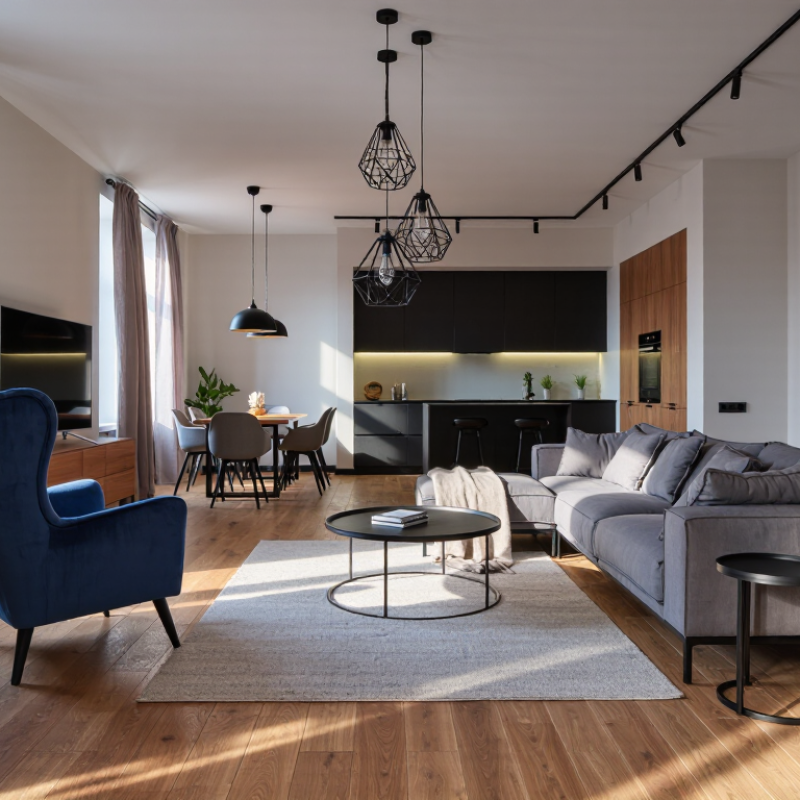
Define your interior style as a set of choices, not a label copied from a picture. Notice what you keep returning to: warm wood, quiet colors, curved shapes, or uncluttered surfaces. Then choose three guiding principles, such as comfort, natural texture, and visual calm. These principles help you decide whether a new chair, lamp, or rug belongs. For example, a pale oak table and linen curtains may share a relaxed feel, even if their shapes differ. Cohesion does not mean matching everything. That can feel flat.
Tips: Make a small reference board with room photos, fabric samples, and paint swatches. Limit the main palette to a few colors, then repeat one accent in different ways. Test samples in morning and evening light; a soft beige can look surprisingly pink beside a cool gray.
Use your principles to guide practical decisions, too. If comfort matters, leave clear paths and choose seating you will actually use. If texture is central, mix smooth plaster, woven fabric, and a slightly imperfect wooden surface. Keep what works in your real home, not only in staged images. I still find that a room can look balanced on paper but feel too careful once lived in. Leave space to adjust. A style should support daily routines, and it may evolve as those routines change.
| Design Element | Core Principle | Practical Guideline | Example Application |
|---|---|---|---|
| Interior style definition | Choose a clear visual direction before selecting individual furnishings. | Describe the intended look with a few consistent terms, such as warm, minimal, natural, or traditional. | A “warm contemporary” room might combine simple furniture shapes with natural wood and soft, neutral colors. |
| Color palette | Repeat a limited group of related colors to connect different areas. | Start with a dominant background color, add supporting colors, and use a smaller number of accents. | Use warm white on walls, muted green in textiles, and terracotta in a few accessories. |
| Materials and finishes | Use recurring materials or finishes to create continuity. | Select a small set of complementary materials and repeat them in more than one location. | Echo oak in a dining table, shelving, and picture frames; balance it with linen and matte metal. |
| Furniture forms | Relate furniture through shape, scale, or visual weight. | Mix pieces thoughtfully, but repeat at least one feature such as rounded edges, clean lines, or tapered legs. | Pair a curved sofa with a rounded coffee table and a circular wall mirror. |
| Pattern and texture | Vary surface interest while keeping colors or motifs connected. | Combine different textures, and use patterns that share a color, scale, or general character. | Layer a plain linen curtain, a woven rug, and a small-scale patterned cushion in related tones. |
| Lighting | Make lighting part of the overall design rather than treating it as an afterthought. | Combine general, task, and accent lighting where appropriate, and coordinate fixture finishes with other room details. | Use ceiling lighting for overall illumination, a reading lamp beside a chair, and a table lamp for a softer evening glow. |
| Proportion and spacing | Keep furnishings appropriately scaled and allow practical movement through the room. | Measure the room and furniture before buying; avoid overcrowding key walkways and seating areas. | Choose a rug large enough to relate the main seating pieces instead of using a small rug that appears isolated. |
| Decor and personal objects | Use accessories to reinforce the style and express personal taste. | Group objects with a shared color, material, or theme, and leave some surfaces uncluttered. | Arrange a few ceramic pieces and framed artwork in a coordinated palette rather than displaying many unrelated items. |
Notice the materials and shapes you keep choosing, such as warm wood or curved chairs. Pick three guiding principles. That can feel flat if everything matches.
Repeat a small palette and one accent in different ways. A pale oak table can sit comfortably beside linen curtains without matching them exactly.
Measure doors, windows, ceiling height, and walking routes. Check whether chairs block a doorway or leave a narrow path to the kitchen.
Leave clear routes, choose seating you will actually use, and keep storage within reach. A room should work on an ordinary Tuesday.
Test paint and fabric samples in morning and evening light. Beige may look pink beside cool gray, especially across a full wall.
Compare their colors and materials with your planned palette. Some details add useful character; others may feel dated. I would not preserve everything automatically.
Keep the radiator clear, and check for drafts before adding thick curtains. A sofa placed too close can disrupt both comfort and heat flow.
Combine a few distinct surfaces, such as smooth plaster, woven fabric, and imperfect wood. Leave space to adjust. The balance may need a second look.
Creating a cohesive interior style begins with defining the look and the principles that will guide each design choice, such as simplicity, warmth, or balance. Consider how the space will be used, its proportions, natural light, and existing features before choosing what to change or keep. These details help ensure that the design feels suited to the room rather than imposed on it.
A consistent palette of colors and materials can connect different areas and create a sense of flow. Choose furniture and lighting with shapes, finishes, and proportions that feel related, while allowing enough variation to keep the space interesting. Finally, layer accessories thoughtfully and review the overall balance. When learning how to create a cohesive interior style, focus on how each element supports the larger vision, not just how individual pieces look on their own.

 Cropa Home