How to Choose Top Commercial Furniture from China?

Time:2026-10-08 Author:Oliver
0%

Choosing top commercial furniture from China requires more than comparing photographs and factory prices. It demands practical judgment, clear specifications, and careful supplier verification. This guide explains how to choose furniture for commercial spaces while balancing design, durability, comfort, safety, and total cost.

A restaurant chair may look elegant online but feel unstable after several hours of use. A hotel table may have a beautiful finish yet show scratches after repeated cleaning. Experienced buyers inspect frame materials, joint strength, upholstery density, surface treatments, packaging, and replacement policies. They also request production samples before approving large orders. Details matter.

Reliable sourcing begins with manufacturers who provide consistent communication, documented quality procedures, and relevant testing reports. Buyers should confirm dimensions, fire-performance requirements, moisture resistance, load capacity, and delivery schedules in writing. Factory audits, video inspections, and independent quality checks can reduce avoidable surprises. However, no checklist is perfect. A supplier may perform well on one project and struggle with another. I have learned that realistic tolerances, written standards, and regular communication matter as much as a low quotation.

The best commercial furniture is not always the cheapest option. It should support daily operations, match the brand environment, and remain serviceable for years. Consider how employees move around it, how customers touch it, and how cleaning teams maintain it. Small details can influence long-term value. This article offers a practical framework for comparing Chinese suppliers, assessing samples, controlling risks, and selecting furniture with greater confidence.
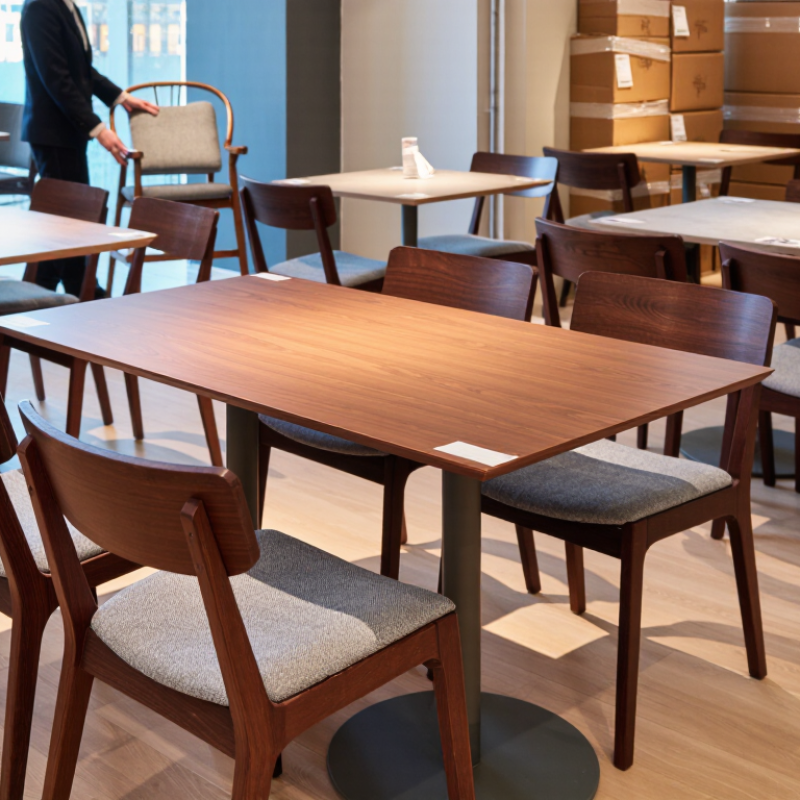
How to Choose Top Commercial Furniture from China?

Define Your Commercial Furniture Requirements and Project Scope

Defining requirements is the real starting point when choosing commercial furniture from China. A polished showroom image is not a specification. Record the project’s location, room functions, user capacity, operating hours, floor plan, delivery date, and installation limits. Then create a bill of quantities covering desks, seating, storage, lighting, finishes, and replacement units. According to Gensler’s 2024 Global Workplace Survey, employees spend about 3.1 days per week in the office but prefer approximately 3.4 days. This supports flexible layouts, movable tables, stackable chairs, and acoustic zoning.

Make performance measurable. State chair testing requirements, desk dimensions, edge tolerances, surface resistance, cable management, fabric abrasion, fire performance, and maximum acceptable defect rates. Applicable standards may include ANSI/BIFMA or EN 16139, depending on the destination market. For sustainability, request material declarations, recycled content evidence, formaldehyde information, and packaging details. The World Green Building Council reports that buildings account for 39% of global energy-related carbon emissions, so furniture choices should consider durability and replacement cycles, not only purchase price.

A Chinese supplier should receive drawings, finish samples, room elevations, and a signed approval sample. Confirm minimum order quantities, production lead time, inspection points, spare parts, packing dimensions, and delivery terms before any deposit. Leave contingency for damaged cartons and site changes. This is where projects often become messy. I have seen beautiful mock-ups fail because power outlets, door clearances, or elevator sizes were ignored. Define those constraints early, even if the first scope feels incomplete.

Evaluate China’s Commercial Furniture Manufacturing Capabilities

Choosing commercial furniture from China starts with the factory, not the catalog. Review its production history, workshop size, and experience with hotels, offices, restaurants, or public projects. Ask for recent project photos, material specifications, and a live video of the manufacturing floor. Vague answers deserve caution. Reliable manufacturers explain their processes clearly.

Look for separate areas for cutting, welding, sanding, painting, upholstery, and final inspection. Modern equipment matters, but trained operators matter more. Check whether machines receive regular maintenance and workers follow documented procedures. Small gaps here can create uneven table edges, weak joints, or mismatched finishes. Request a production sample before approving volume orders. Measure its dimensions, open every drawer, test the hinges, and inspect hidden surfaces. For seating, check foam density, stitching tension, frame strength, and stability on an uneven floor. Do not judge comfort from photographs.

Quality control should include incoming material checks, in-process inspections, and final packing records. Ask how defects are recorded and corrected. A factory that only promises perfection may be less reliable than one that shows corrective actions. That point is easy to miss. Confirm packaging methods, moisture protection, replacement procedures, and realistic production capacity. Capacity claims can change during peak seasons. Request references from comparable projects, then verify details independently. A clear audit trail builds confidence. Still, no factory is flawless. Leave room for tolerance checks, rework, and design adjustments after the first shipment.

How to Choose Top Commercial Furniture from China?

China’s Furniture Manufacturing Capability Evaluated by Export Scale

China’s furniture and furniture-parts exports expanded sharply from 2020 to 2022, reflecting strong production capacity, extensive supplier networks, and established international logistics. The decline in 2023 shows that export scale alone should not determine supplier selection; buyers should also verify quality systems, customization capability, material compliance, lead times, and after-sales support.

Data source: China customs trade statistics compiled from publicly reported annual furniture and furniture-parts export values. Values are rounded estimates in billions of U.S. dollars and represent the broader furniture sector, not any individual company or brand.

Compare Materials, Designs, Prices, and Customization Options

Choosing commercial furniture from China requires more than comparing factory quotes. Materials affect durability, maintenance, appearance, and shipping weight. Solid wood offers warmth, but it may require moisture control during transport. Plywood provides stable structure and usually costs less. Veneer can create an upscale look without the full expense of solid wood. Steel suits busy restaurants, offices, and public areas. Upholstery needs careful checking for abrasion resistance, cleaning performance, and fire-safety requirements in the destination market. Request material samples, test reports, and construction photos before approving production.

Design should match the room’s traffic, lighting, and cleaning routine. A sharp-edged table may look modern, but it can be impractical in crowded dining areas. Neutral colors often support long-term use, while bold finishes may date faster. Ask for drawings with exact dimensions, edge details, hardware specifications, and color references. Small changes matter. A few centimeters can affect seating capacity. Custom sizes, logos, fabrics, and finishes are possible, but they can increase minimum order quantities and lead times.

Price comparisons should include packaging, inspection, shipping, duties, installation, and replacement parts. The lowest factory price is rarely the lowest total cost. Compare equal specifications, not attractive photographs. A detailed quotation should state material thickness, coating type, foam density, carton protection, and payment milestones. Pre-production samples reduce risk, although they cannot reveal every production problem. I once underestimated packaging space, and the final freight cost changed the calculation. That mistake still matters. Ask clear questions, record approvals, and inspect before shipment.

Verify Supplier Quality, Certifications, and Production Standards

Choosing commercial furniture from China requires more than reviewing polished photos. Verify the supplier’s legal registration, factory address, audit records, and production capacity. Request current certificates, not screenshots. The 2023 ISO Survey recorded more than 1.2 million ISO 9001 certificates worldwide, but certification alone does not prove consistent furniture quality. Confirm the certificate number with the issuing body and check its scope.

Use applicable ANSI/BIFMA performance standards for seating, desks, and storage units. These standards address strength, durability, stability, and product safety. Ask for laboratory reports showing test methods, sample numbers, and test dates. A serious factory should explain how it controls welding points, edge finishing, foam density, coating thickness, and packaging. Walk through the production line if possible. Look closely at unfinished joints and dust near the paint booth.

FSC chain-of-custody evidence may support responsible wood sourcing, while ISO 14001 can indicate an environmental management system. Neither replaces product inspection. Hire an independent inspector before shipment, using a written checklist and acceptable quality limits. In my experience, a supplier may pass a showroom review yet miss uneven drawer gaps in bulk production. That detail matters.

Some checks remain imperfect. Factory photographs can be staged, and one successful sample cannot represent an entire container. Require pre-production samples, mid-production photos, and final random inspections. Keep every drawing, material specification, approval record, and corrective-action report. Controls become useful only when someone verifies them repeatedly.

Plan Sampling, Contracts, Shipping, and After-Sales Support

How to Choose Top Commercial Furniture from China?

A reliable purchase begins with a practical sampling plan. Request one full-size chair, desk, or cabinet before approving a large order. Check surface finish, edge sealing, welds, hardware, packaging, and comfort under daily use. Place samples in a real office or hotel area for several days. Record dimensions, colors, materials, and approved changes in a clear inspection sheet. Photos alone can hide uneven joints and weak drawer runners. I learned this after a sample looked excellent but felt unstable during repeated use.

Contracts should describe every important detail, not just the total price. Include product codes, drawings, material grades, tolerances, quantities, delivery dates, payment stages, inspection standards, and procedures for defective goods. Define who pays for rework, replacement, or extra transport. Keep one signed version with dated attachments. Vague language creates expensive arguments.

Shipping needs equal attention. Confirm carton dimensions, loading plans, moisture protection, labeling, and destination documents before production finishes. Ask for progress photos and an independent pre-shipment inspection when the order is large. Add time for port delays and damaged cartons. Delays happen.

After-sales support should cover spare parts, installation guidance, response times, and replacement procedures. Test this support before payment by sending a realistic technical question. A fast answer is useful, but a documented answer is safer. Some suppliers promise broad support, then respond slowly after delivery. That risk deserves a written remedy.

FAQS

What information should be defined before selecting commercial furniture from China?

Record the location, room functions, user capacity, operating hours, floor plan, delivery date, and installation limits.

Why are flexible furniture layouts useful in commercial spaces?

Movable tables, stackable chairs, and acoustic zones support changing attendance and room functions.

Which performance details should appear in the furniture specification?

Specify dimensions, edge tolerances, surface resistance, cable management, fabric durability, fire performance, and defect limits.

How can a buyer evaluate a furniture factory?

Review its production history, workshop areas, equipment maintenance, documented procedures, and comparable project experience.

What should be checked during a furniture sample inspection?

Measure every dimension and inspect finishes, edge sealing, welds, hardware, drawers, hinges, and hidden surfaces.

What should a commercial furniture contract include?

Include product codes, drawings, material grades, tolerances, quantities, delivery dates, payment stages, and inspection standards.

How can shipping risks be reduced?

Confirm carton dimensions, loading plans, moisture protection, labels, destination documents, and delivery terms before production ends.

What after-sales support should be confirmed before payment?

Confirm spare parts, installation guidance, response times, and replacement procedures in writing.

Conclusion

Choosing the right commercial furniture from China begins with a clear understanding of your project scope, space requirements, budget, timeline, and functional goals. To learn how to choose furniture for commercial spaces, define the intended use, preferred style, quantity, comfort standards, durability expectations, and opportunities for customization. Then assess manufacturers based on their production capacity, experience with similar projects, material options, design flexibility, pricing transparency, and ability to maintain consistent quality at scale.

Before placing an order, verify product specifications, quality-control procedures, relevant certifications, and manufacturing standards. Request samples to evaluate construction, finishes, ergonomics, and appearance in real conditions. A detailed contract should clarify drawings, materials, quantities, payment terms, inspection procedures, delivery schedules, packaging, and responsibilities. Finally, plan shipping carefully and confirm the supplier’s communication process, installation guidance, warranty coverage, replacement policy, and after-sales support. A structured evaluation helps reduce risks and ensures the furniture meets both practical and aesthetic expectations.

Oliver

Oliver

Oliver is a seasoned marketing professional with a wealth of expertise in driving brand awareness and engagement. With a deep understanding of our company's product offerings, he consistently delivers high-quality content that enriches our professional blog. His insights not only shed light on......